The life of George Clark Rankin best defines the Holiness way. -
The Life of George Clark Rankin
When George Clark Rankin arrived at his uncles as a teenager he describes his uncle as a farmer like Dallas in whom I just described... In the course of an hour I was at my uncle's. He was surprised to see me, but gave me a cordial welcome. The first thing he did was to disarm me, and that ended my pistol-toting. I have never had one about my person or home to this good day. And I never will understand just why I had that one. A good dinner refreshed me and I soon unfolded my plans and they were satisfactory to my kind-hearted kinsman. He was in the midst of cotton-picking and that afternoon I went to the field and, with a long sack about my waist, had my first experience in the cottonfield. We then would get ready for the revival occurring that night…
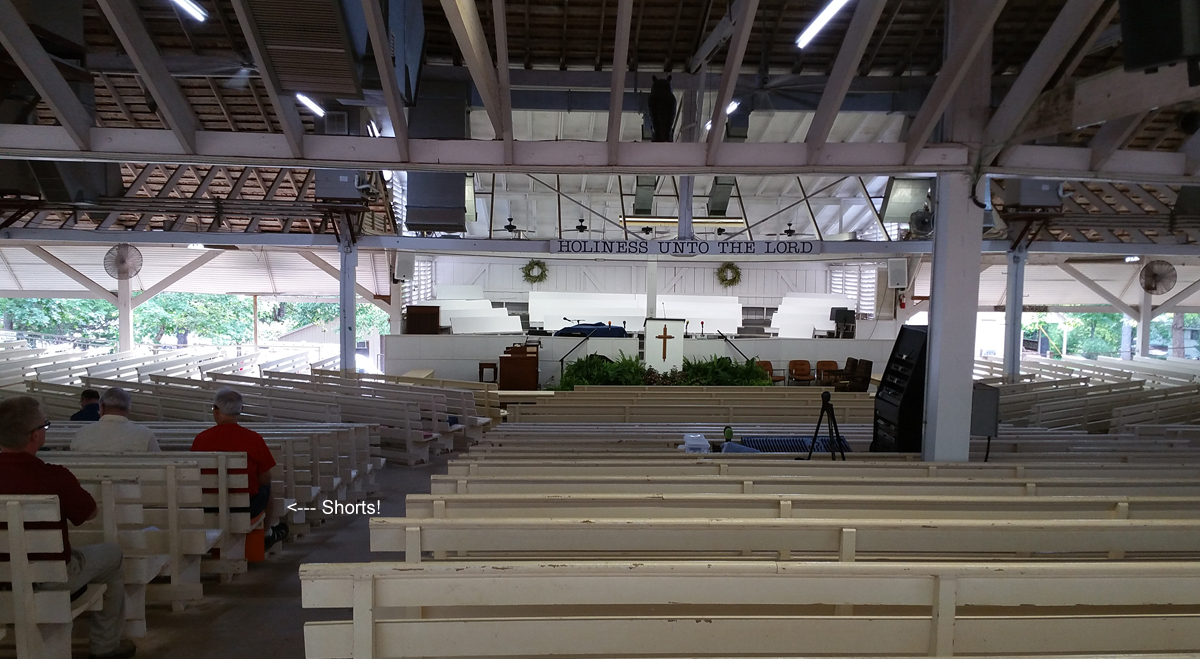
After the team had been fed and we had been to supper we put the mules to the wagon, filled it with chairs and we were off to the meeting. When we reached the locality it was about dark and the people were assembling. Their horses and wagons filled up the cleared spaces and the singing was already in progress. My uncle and his family went well up toward the front, but I dropped into a seat well to the rear. It was an old-fashioned Church, ancient in appearance, oblong in shape and unpretentious. There were a few prayers and the minister came in with his saddlebags and entered the pulpit. He was the Rev. W. H. Heath, the circuit rider. His prayer impressed me with his earnestness and there were many amens to it in the audience. I do not remember his text, but it was a typical revival sermon, full of unction and power.
At its close he invited penitents to the altar and a great many young people flocked to it and bowed for prayer. Many of them became very much affected and they cried out distressingly for mercy. It had a strange effect on me. It made me nervous and I wanted to retire. Directly my uncle came back to me, put his arm around my shoulder and asked me if I did not want to be religious. I told him that I had always had that desire, that mother had brought me up that way, and really I did not know anything else. Then he wanted to know if I had ever professed religion. I hardly understood what he meant and did not answer him. He changed his question and asked me if I had ever been to the altar for prayer, and I answered him in the negative. Then he earnestly besought me to let him take me up to the altar and join the others in being prayed for. It really embarrassed me and I hardly knew what to say to him. He spoke to me of my mother and said that when she was a little girl she went to the altar and that Christ accepted her and she had been a good Christian all these years. That touched me in a tender spot, for mother always did do what was right; and then I was far away from her and wanted to see her. Oh, if she were there to tell me what to do!
By and by I yielded to his entreaty and he led forward to the altar. The minister took me by the hand and spoke tenderly to me as I knelt at the altar. I had gone more out of sympathy than conviction, and I did not know what to do after I bowed there. The others were praying aloud and now and then one would rise shoutingly happy and make the old building ring with his glad praise. It was a novel experience to me. I did not know what to pray for, neither did I know what to expect if I did pray. I spent the most of the hour wondering why I was there and what it all meant. No one explained anything to me. Once in awhile some good old brother or sister would pass my way, strike me on the back and tell me to look up and believe and the blessing would come. But that was not encouraging to me. In fact, it sounded like nonsense and the noise was distracting me. I thought the service never would close, and when it did conclude with the benediction I heaved a sigh of relief. That was my first experience at the mourner's bench.
As we drove home I did not have much to say, but I listened attentively to the conversation between my uncle and his wife. They were greatly impressed with the meeting, and they spoke first of this one and that one who had "come through" and what a change it would make in the community, as many of them were bad boys. As we were putting up the team my uncle spoke very encouragingly to me; he was delighted with the step I had taken and he pleaded with me not to turn back, but to press on until I found the pearl of great price. He knew my mother would be very happy over the start I had made. Before going to sleep I fell into a train of thought, though I was tired and exhausted. I wondered why I had gone to that altar and what I had gained by it. I felt no special conviction and had received no special impression, but then if my mother had started that way there must be something in it, for she always did what was right. I silently lifted my heart to God in prayer for conviction and guidance. I knew how to pray, for I had come up through prayer, but not the mourner's bench sort. So I determined to continue to attend the meeting and keep on going to the altar until I got religion.
When evening came I was ready for Church service and was glad to go. It required no urging. Another large crowd was present and the preacher was as earnest as ever. I did not give much heed to the sermon. In fact, I do not recall a word of it. I was anxious for him to conclude and give me a chance to go to the altar. I had gotten it into my head that there was some real virtue in the mourner's bench; and when the time came I was one of the first to prostrate myself before the altar in prayer. Many others did likewise. Two or three good people at intervals knelt by me and spoke encouragingly to me, but they did not help me. Their talks were mere exhortations to earnestness and faith, but there was no explanation of faith, neither was there any light thrown upon my mind and heart. I wrought myself up into tears and cries for help, but the whole situation was dark and I hardly knew why I cried, or what was the trouble with me. Now and then others would arise from the altar in an ecstasy of joy, but there was no joy for me. When the service closed I was discouraged and felt that maybe I was too hardhearted and the good Spirit could do nothing for me.